
RBI's interest rate decision, quarterly earnings and global cues would be the major driving factors for equity markets this week, analysts said adding that the impact of the Union Budget could linger on this week. Trading activity of foreign investors will also be a key driver for the markets, experts noted. "US and India's manufacturing PMI for January to be released on Monday, will be the key macro data to watch out for.

Wholesale inflation fell to a 3-month low of 2.04 per cent in July on decline in prices of food items especially vegetables, government data released on Wednesday showed. The decline in wholesale price index (WPI) based inflation in July came after it rose for four months in a row till June, when it was 3.36 per cent. It was (-) 1.23 per cent in July last year. In April wholesale inflation stood at 1.19 per cent.

With the setting of MPC, the interest rate setting powers would move from RBI Governor to the panel.

New dates to be announced shortly, the RBI said.

'Overall, domestic demand has moderated significantly. 'The weakening of private consumption, which for long has been the bedrock of aggregate demand, in particular, is a matter of concern,' RBI Governor Shaktikanta Das said in the MPC meetings, in October.
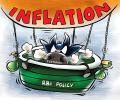
The Reserve Bank of India on Friday retained its projection for retail inflation at 4.5 per cent for the current fiscal assuming a normal monsoon, while emphasising that uncertainties related to food price outlook warrant a close monitoring. Consumer Price Index (CPI)-based retail inflation has been projected at 4.5 per cent with quarter-wise projections at 4.9 per cent in Q1 (April-June), 3.8 per cent in Q2, 4.6 per cent in Q3, and 4.5 per cent in Q4.

They pointed out that Finance Minister Nirmala Sitharaman relies a lot on divestments, where the government under-performed in FY2019-20, to achieve the 3.8 per cent fiscal deficit target.

The Reserve Bank of India's (RBI's) interest rate decision, West Asia conflict and trading activity of foreign investors are the key factors that will dictate investors' sentiment in the market this week, analysts said. Moreover, quarterly earnings from IT bellwether TCS, domestic macroeconomic data and movement in global oil benchmark Brent crude would also guide trends in the market. Worsening tensions in the Middle East and foreign fund outflows were the major culprits behind the equity markets sharp fall last week.

The government on Monday appointed three eminent economists Ashima Goyal, Jayanth R Varma and Shankanka Bhide as members of the rate-setting Monetary Policy Committee of the RBI

Das favoured shifting the stance of monetary policy from neutral to accommodative to send a clear signal, indicating that more measures could be taken in the near future to boost growth.
An immediate RBI rate cut will lower lending rates for banks' MSME/retail/mortgage loans before the 'busy' industrial season ends in March.
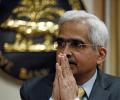
Monetary Policy Committee keeps key interest rate (repo) unchanged at 4% for 7th consecutive time; Consequently, reverse repo rate too remains unchanged at 3.35%; Bank rate also remains same at 4.25%;
The Reserve Bank of India's rate-setting panel on Wednesday began its three-day deliberations on the next bi-monthly monetary policy amid expectations of at least a 35-basis-point hike in the interest rate to check high inflation. If raised, it will be the third consecutive hike in the repo rate -- the short-term rate at which the RBI lends money to banks. The central bank has already announced to gradually withdraw its accommodative monetary policy stance.

The domestic stock market may face volatility amid the monthly derivatives expiry scheduled this week, while investors would mainly await the outcome of RBI's interest rate decision on Friday, said analysts. Global market movement would also continue to drive sentiment amid a bearish trend recently following rate hikes by the US Federal Reserve and other central banks. The Reserve Bank of India (RBI) may take cues from its global counterparts to raise interest rate for the fourth time in a row to control inflation.

The 6-member Monetary Policy Committee, headed by Reserve Bank of India Governor Urjit Patel, in its fifth bi-monthly review, kept the repo rate unchanged at 6 per cent and reverse repo at 5.75 per cent.

The Reserve Bank of India on Friday decided to keep benchmark interest rate unchanged at 4 per cent but maintained an accommodative stance even as the economy is showing signs of recovery after the second Covid wave.

Domestic macroeconomic data, RBI policy and developments related to the Russia-Ukraine war would be major driving factors for the stock market this week, analysts said. Moreover, FPI investment and trends in crude oil would also influence the trading sentiment, they added. "This week, the RBI credit policy will be a critical factor for Indian markets.
For five consecutive policy reviews in 2023, the Reserve Bank of India (RBI) chose to hold rates, citing inflation threat. And when the prices did cool off a bit, it reminded all about the target to get the headline consumer price inflation at 4 per cent and the risks from food inflation. Heading into the new year, all eyes are on when RBI will cut the rates, especially after one of the Monetary Policy Committee (MPC) members stressed on the need for such an action in the face of the US Federal Reserve's guidance for easing rates.

These are the highlights of the seventh bi-monthly monetary policy statement for 2019-20 by the RBI amid COVID-19 pandemic:

Major laggards among Sensex constituents included Bharti Airtel, Hindustan Unilever, Tata Steel and ITC. Power Grid, UltraTech Cement, NTPC and Titan emerged as winners.

The Reserve Bank is likely to maintain status quo on interest rates in its forthcoming monetary policy review but may change the stance in view of retail inflation piercing its upper tolerance limit, global uncertainties created by the ongoing Russia-Ukraine war, and the urgency to protect and boost growth, feel experts. The RBI governor-headed rate setting panel -- Monetary Policy Committee (MPC) -- will be holding its first meeting of the 2022-23 fiscal from April 6 to 8. The outcome will be announced on April 8.
RBI's interest rate decision, macroeconomic data, global trends and trading activity of foreign investors are the crucial factors to drive equity markets in a holiday-shortened week ahead, analysts said. Markets would remain closed on Monday for Gandhi Jayanti. "While global cues will continue to dictate trends in local markets, focus will shift to RBI's monetary policy announcement on Friday. "Although the market is expecting a status quo on interest rates, global concerns like rising US dollar index and bond yields coupled with surging crude oil prices continue to weigh on investors' minds.
The Monetary Policy Committee (MPC) is expected to maintain the status quo on policy rates for the fourth consecutive time in its October 4-6 review meeting. The incremental information available since its last meeting in August suggests that growth and inflation prints for the second quarter (Q2) of financial year 2023-24 (FY24) will exceed the committee's projections. However, the Consumer Price Index (CPI)-based inflation is expected to moderate in the second half (H2) of FY24.
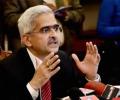
Amid prolonged uncertainty, continued policy support will be crucial for sustained economic recovery from the coronavirus pandemic, Reserve Bank Governor Shaktikanta Das said at the recent meeting of the Monetary Policy Committee. "In this period of prolonged uncertainty, it would be wise to remain agile and respond in a gradual, calibrated and well telegraphed manner to the emerging challenges," opined Das, according to the minutes of the MPC meeting released by the Reserve Bank on Thursday. Observing that economic recovery from the pandemic remains incomplete and uneven, he said, "continued support from various policies remains crucial for a sustained recovery." The governor said the renewed surge in international crude oil prices, however, requires close monitoring.

Benchmark equity indices Sensex and Nifty closed higher by more than half a per cent on Wednesday following buying in IT, financial and oil stocks after the RBI slowed down the pace of interest rate hikes. Ending its two-day slide, the 30-share BSE Sensex rebounded by 377.75 points or 0.63 per cent to close at 60,663.79 with 24 of its constituents posting gains. The broader Nifty of the NSE spurted by 150.20 points or 0.85 per cent to settle at 17,871.70, riding on a rally in Adani Enterprises, Adani Ports and HDFC Life.

Reserve Bank of India (RBI) on Friday kept the benchmark interest rate unchanged at 4 per cent and decided to continue with its accommodative stance despite rising inflation. This is the 11th time in a row that the Monetary Policy Committee (MPC) headed by RBI Governor Shaktikanta Das has maintained the status quo. RBI had last revised its policy repo rate or the short-term lending rate on May 22, 2020 in an off-policy cycle to perk up demand by cutting the interest rate to a historic low.

In the Union Budget for Financial Year 2023-24 (FY24), Finance Minister Nirmala Sitharaman had held forth on the need for better governance and investor protection in the banking sector. She had proposed certain amendments to the Reserve Bank of India Act (RBI Act), 1934; the Banking Regulation Act (BR Act), 1949; and the Banking Companies (Acquisition and Transfer of Undertakings) Act, 1970.

Among the Sensex firms, ITC, Tata Consultancy Services, Wipro, Asian Paints, HCL Technologies, HDFC, Kotak Mahindra Bank, Bajaj Finance, Infosys, Sun Pharma, Hindustan Unilever, Power Grid, Reliance Industries and HDFC Bank were the winners. HCL Technologies climbed 1 per cent after the company on Thursday posted a 10.85 per cent increase in consolidated net profit to Rs 3,983 crore for the fourth quarter of 2022-23. Tech Mahindra, Maruti, Tata Steel, UltraTech Cement, Tata Motors and ICICI Bank were among the laggards.
Some say the MPC will raise the rate, while others are of the view that there is already de facto interest rate tightening through rising bond yields, which might prompt the central bank to go for a pause.

The Reserve Bank of India on Thursday opted for a pause second time in a row, maintaining key benchmark policy rate at 6.5 per cent as inflation moderates. The rate increase cycle was paused in April after six consecutive rate hikes aggregating to 250 basis points since May 2022. Announcing the bi-monthly monetary policy, RBI Governor Shaktikanta Das said the Monetary Policy Committee (MPC) unanimously decided to keep the rate unchanged at 6.5 per cent.
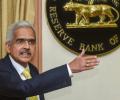
The Reserve Bank of India on Wednesday kept the benchmark interest rate unchanged at 4 per cent and decided to continue with its accommodative stance against the backdrop of concerns over the emergence of the new coronavirus variant Omicron.

Members of the Monetary Policy Committee (MPC) felt that though the Indian economy was resilient in the third wave, it, however, lost some momentum and with inflation likely to soften, there is room to continue with the accommodative stance and support revival, the minutes of the MPC meeting released on Thursday revealed. The six-member MPC voted to keep the policy rate unchanged and continued with the accommodative stance at its meeting on February 10. However, external member Jayanth Verma voted against the stance because he felt a switch to neutral was long overdue and the current stance has become counterproductive and deflects focus away from addressing recessionary trends that date back to at least 2019.

The RBI on Wednesday cautioned that while the Indian economy appears capable of weathering the deterioration in geopolitical conditions amid the ongoing Russia-Ukraine war, it faces headwinds from global spillovers from geopolitical tensions, elevated commodity prices and moderating external demand. The RBI, however, did not tinker with the GDP growth projection made in April. It had slashed the GDP growth projection for the fiscal 2022-23 to 7.2 per cent from its earlier forecast of 7.8 per cent.

Indian economy is gathering momentum in the second quarter, though inflation would continue to average above the central bank's comfort zone of 6 per cent, said an article in the RBI's monthly bulletin released on Thursday. The consumer price index (CPI) based retail inflation shot up significantly to 7.44 per cent in July, from 4.87 per cent in the preceding month, mainly due to soaring prices of tomato, vegetables and other food items. In his address to the nation on the Independence Day, Prime Minister Narendra Modi vowed to take more steps to contain price rise.

With inflation remaining at elevated levels, central banks around the world, including the Reserve Bank of India (RBI), will kill excess demand in economy over the next six to eight months, sources in the know said. They also indicated that there could be a rate hike in June, when the inflation forecast for the current financial year would be raised. The RBI, the sources said, might announce more steps such as raising the limit on held-to-maturity (HTM) bonds to support government borrowings but might not come out with any further quantitative easing GSAP (Government Securities Acquisition Programme) measures.

Equities went into a tailspin on Wednesday after the Reserve Bank surprised the market with a mid-cycle rate hike in a bid to tame soaring inflation.

The Reserve Bank of India on Thursday kept the benchmark interest rate unchanged at 4 per cent and decided to continue with its accommodative stance against the backdrop of an elevated level of inflation.
Uncertainty is emerging as the only certainty, said RBI Governor Shaktikanta Das as he emphasised on continued policy support at the December MPC meet during which members expressed concerns over spread of the Omicron variant of coronavirus, as per the minutes of the rate-setting panel released on Wednesday. After three days of deliberations, the six members of the Monetary Policy Committee (MPC) on December 8 unanimously voted for status quo on policy rates for the ninth consecutive time. At the meeting, the RBI Governor said risks stalking the global economy have amplified with rapid spread of the virus mutations, including the Omicron variant, leading to countries scrambling for restrictions.

The criticism that the Reserve Bank of India was behind the curve in hiking interest rate to tame rising inflation is unfair, former RBI Governor D Subbarao said on Wednesday and asserted that it is difficult for any central bank to anticipate the future more accurately. Earlier this month, Monetary Policy Committee (MPC), the central bank's rate-setting panel, surprised the markets with a 40 basis points hike in repo rate in an off-cycle policy meeting. It was also the first rate hike after August 2018, amid spiralling inflation.
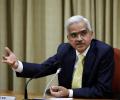
RBI Governor Shaktikanta Das on Wednesday defended the Reserve Bank's handling of the price situation, saying acting prematurely on inflation would have exerted a heavy cost on the economy and citizens. Acknowledging that the inflation target has been missed, Das said the RBI decided to support the economy by not introducing a rate hike in face of a spike in inflation. "We prevented a 'complete collapse of the economy' by keeping rates lower and stayed away from premature tightening," Das said speaking at the annual FIBAC conference of bankers in Mumbai.
 © 2026 Rediff.com - Advertise with us - Disclaimer - Privacy Policy - Sitemap - Feedback - About us - Terms of use - Grievances